
Update for SysML v2. The same model now generates Python as well as C++, and the generator
can draw a model instead of generating from it. A part also drives itself: process() steps
the state machines it owns, so a test driver calls one method on the top part and nothing else.
Highlights since 7.2.9:
-
A Python back end.
-l pythongenerates a Python module from the same model that-l cppxturns into C++. Parts become classes, machines are stepped byprocess(), and the runtime environment —framework.py, the counterpart offramework.h— is delivered with the product rather than generated. -
Diagrams from the generator.
-l svgdraws a model: the state machine of a part as a state chart, the flow of an action as an activity diagram, or the structure of a part with the parts it contains, their ports and what connects them.-tnames what to draw,-pcand-pcdsay how much detail a part box carries. No other tool is needed — see Tooling and Validation. -
process()steps the state machines. A part’sprocess()now steps every machine it drives and then the parts it contains. A machine initializes itself on its first step. A driver that used to name each machine can calltls.process()instead.If you override
process()orinit()in a subclass, call the base-class method as well — otherwise the parts below are no longer stepped. -
More of the language is generated: collections and multiplicities, exhibited state machines (
exhibit state s references SharedSM;), specialization and redefinition of features, and values derived from an expression over other features —sum,product,size,maxandminover a collection, computed ininit(). -
Non-executable constructs are reported, not refused.
requirement,constraint,use case,view,analysisandallocationare parsed, named on the console asW3170, and skipped. A model can keep them beside the parts they constrain and still generate everything else. -
Clearer diagnostics. A message says which line of the model it is about — including the connect ends and assignments that previously reported without a position. A wrong command line flag now prints the usage text, and
-hasks for it. -
Portability. The generated code and its runtime compile with g++, clang++ and the Microsoft compiler alike.
New diagnostic: W3210 reports a model that assigns a Real to an Integer feature, which
silently discards the fraction. It is reported against the model line rather than left to a C++
compiler, which mentions it only on some toolchains.
One call drives the system#
TrafficLightSystem tls;
tls.init();                       // creates the parts, wires the connections

for (int i = 0; i < 80; i++) {
    tls.process();                // every machine in the system, top part downwards
    std::this_thread::sleep_for(std::chrono::milliseconds(100));
}
The same model, in Python#
java -cp "path/to/codegen/*" codegen.Main -p sysml2text -l python -o system oven.sysmloven = Oven()
oven.init()
while True:
oven.process()
time.sleep(0.2)Drawing a model#
java -cp "path/to/codegen/*" codegen.Main -p sysml2text -l svg \
     -t MicrowaveOfen::TimerDisplay -o TimerDisplayStateMachine oven.sysml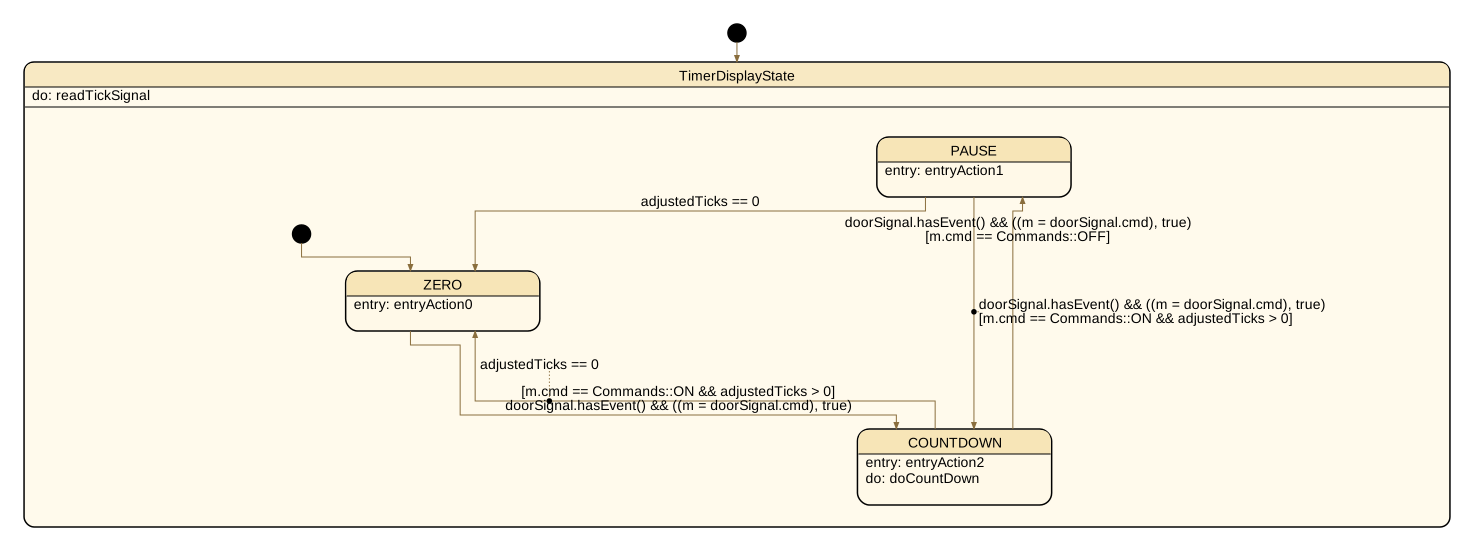
The drawing is made from the same parsed model the generator works on, so it doubles as a check: if the picture does not show what you expect, the generated code will not either.